
Composite bonding or veneers? An honest Telford comparison
Cameron provides both, so there is no commercial reason to steer you either way. Here is what each one actually does, what it costs you over ten years rather than today, and when the answer is neither.

They are not really competing treatments
Most comparisons online set these up as rivals, which is not how they work in practice. Composite bonding and porcelain veneers do overlapping jobs at different scales, and the right answer depends on how big a change you want and how much you value longevity over conservatism.
The short version. If the change you want is small, bonding is usually the better answer and it is the more conservative one. If you want a substantial change in shade or shape across several teeth and you want it to hold its colour for longer, porcelain generally does that better. And if the thing bothering you is where the teeth are sitting rather than what shape they are, the honest answer is neither, at least not yet.
Composite bonding or veneers: Side by side
What it changes
BondingThe shape of a tooth. Chips, worn edges, small gaps, uneven lengths, black triangles, peg-shaped teeth.
VeneersThe shape, shade, proportion and surface of a tooth, across a bigger range.
Tooth preparation
BondingUsually additive, meaning material goes on rather than enamel coming off.
VeneersMinimal preparation on suitable teeth, more where the teeth are darker, larger or out of position. Confirmed after assessment, never before.
Reversibility
BondingMore conservative, though removing composite can take a little tooth surface with it.
VeneersWhere preparation is needed, not reversible.
How long it lasts
BondingCommonly around five to seven years before a refresh or replacement.
VeneersGenerally longer, though not for life, and both depend heavily on your bite and habits.
Staining
BondingCan pick up staining and lose surface polish over the years. A polish usually lifts most of it.
VeneersPorcelain resists staining well. The natural tooth and margins around it can still change.
Repairs
BondingSmall chips can often be repaired in one visit.
VeneersA chipped or debonded veneer usually needs replacing rather than patching.
Number of visits
BondingUsually one appointment. Nothing is made in a laboratory.
VeneersSeveral appointments, including a trial smile stage and laboratory time.
Cost
BondingLower per tooth, with maintenance and eventual replacement to factor in.
VeneersHigher per tooth, with a longer expected life. Both from-prices sit on the prices and finance page.
When Cameron recommends composite bonding
The change you want is modest, and the teeth are broadly where they should be
You are treating one to four teeth rather than a whole smile
You want it done in a single appointment
You would rather keep the option open than commit to porcelain
You want the most conservative thing that will do the job
When he recommends porcelain veneers
You want a significant change in shade that whitening alone will not achieve
Several teeth need reshaping and you want them to match reliably
You want the result to hold its colour for as long as possible
Existing bonding has been repeatedly repaired and it is time for something more durable
And when the answer is neither
If your teeth are crowded, rotated or leaning, adding material to the front of them means adding bulk to disguise where they are sitting. It looks heavier, it wears faster and it costs more than it needed to. Aligning first with Invisalign usually means whatever comes afterwards is smaller, cheaper and less invasive, and sometimes it means nothing else is needed at all.
If the shade is the only thing bothering you, whitening on its own may get you there without touching a tooth. And if one tooth alone is letting the rest down, internal whitening or white spot treatment can sometimes solve it without a veneer on anything.





Cameron’s nurses and patients who have had composite bonding
Colleagues who watch him work every week, and could go anywhere.
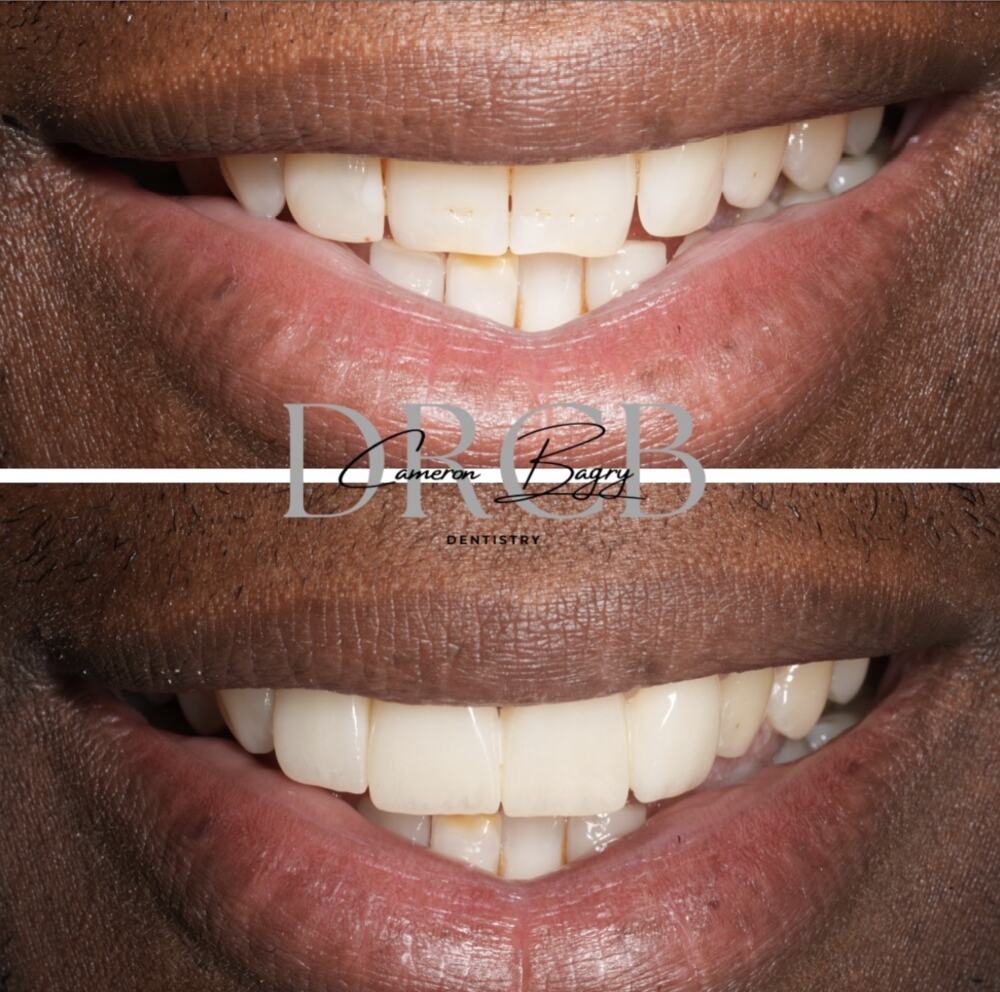
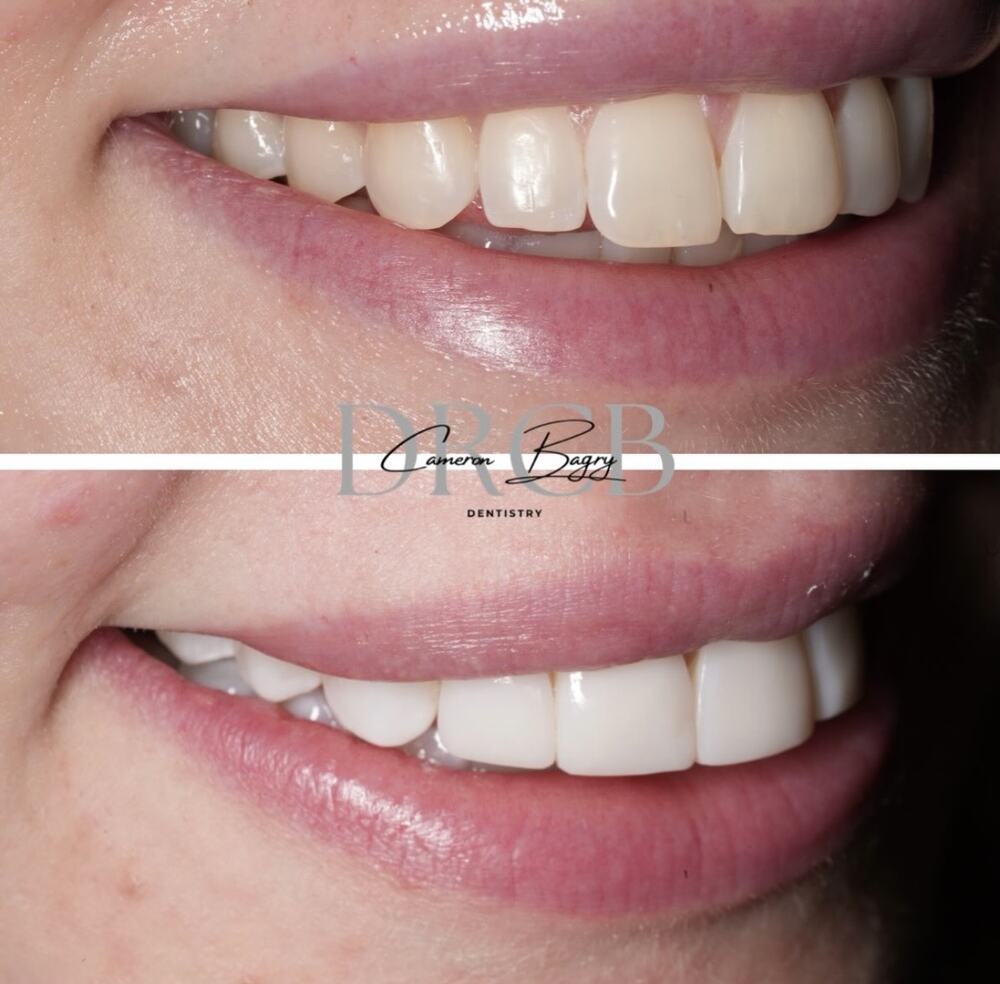
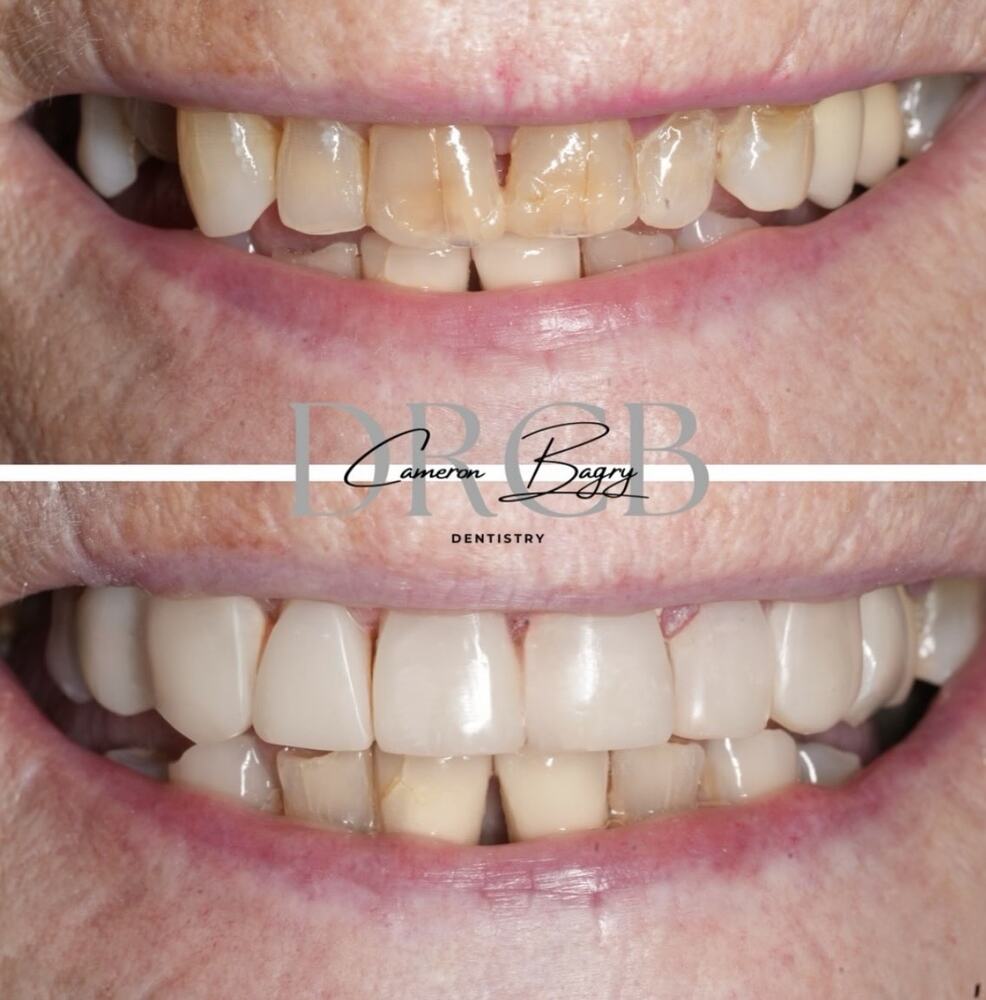
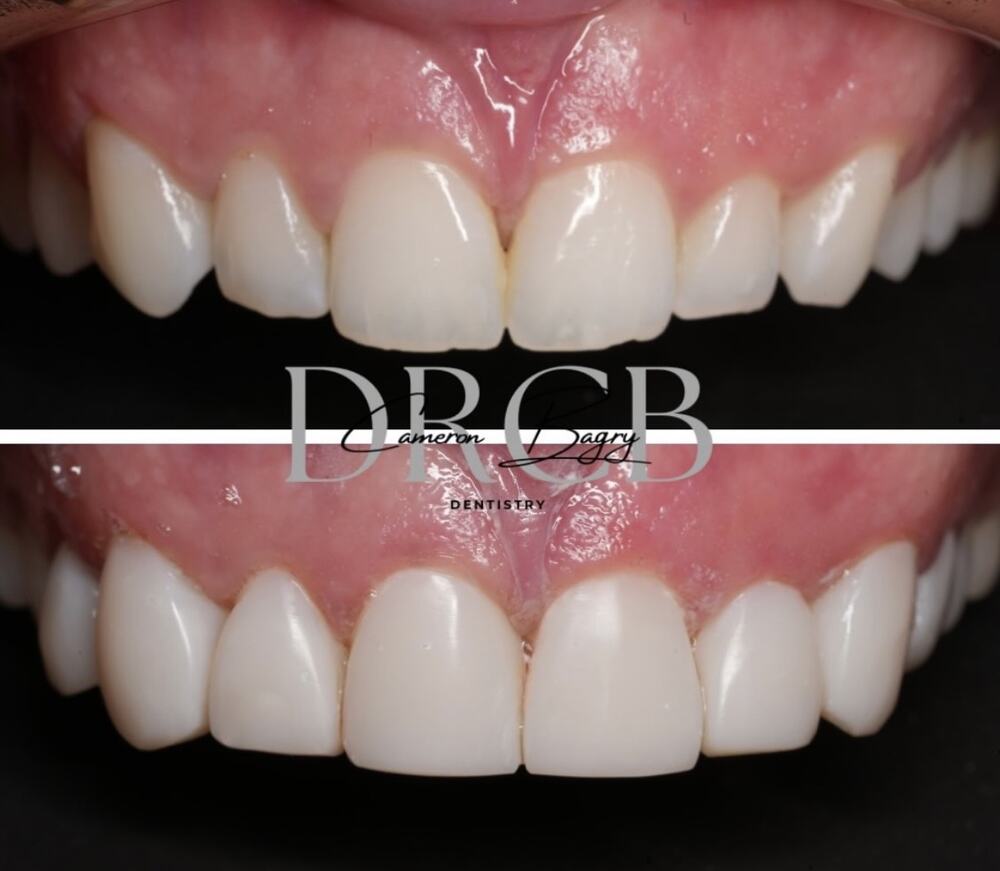
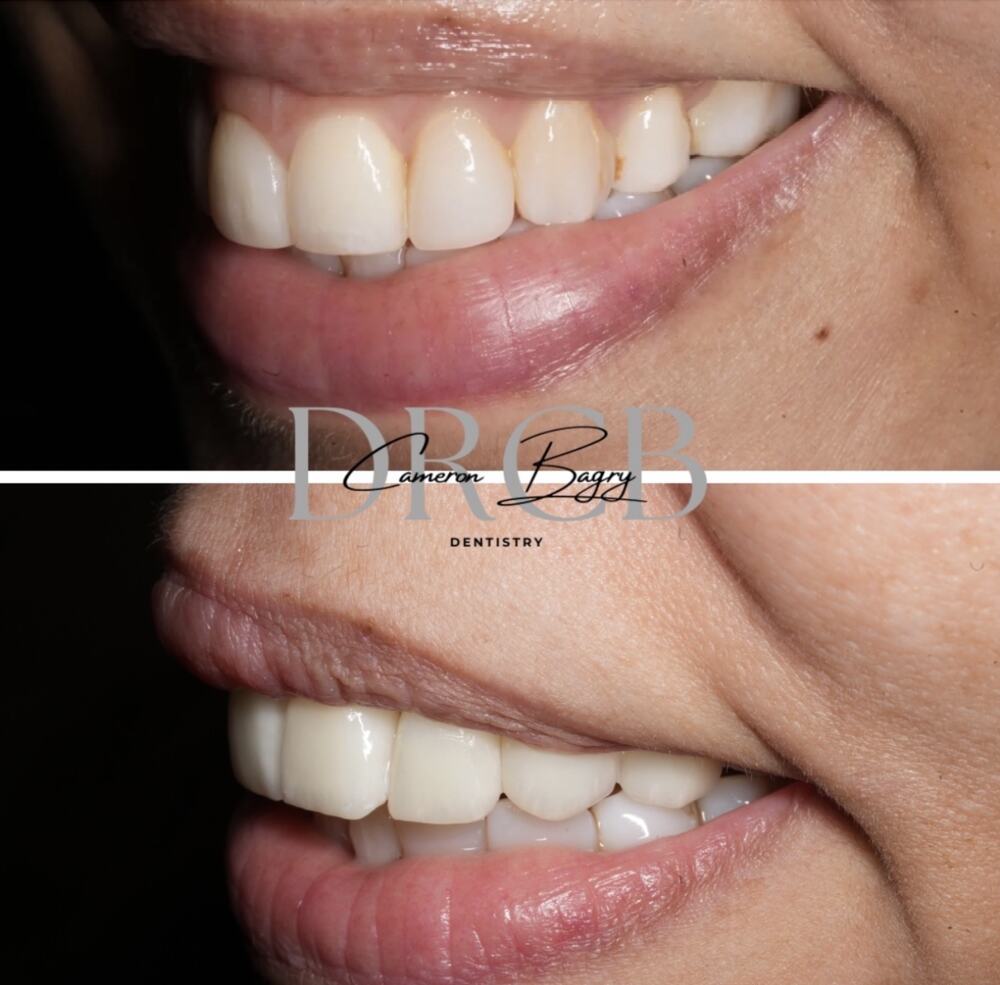
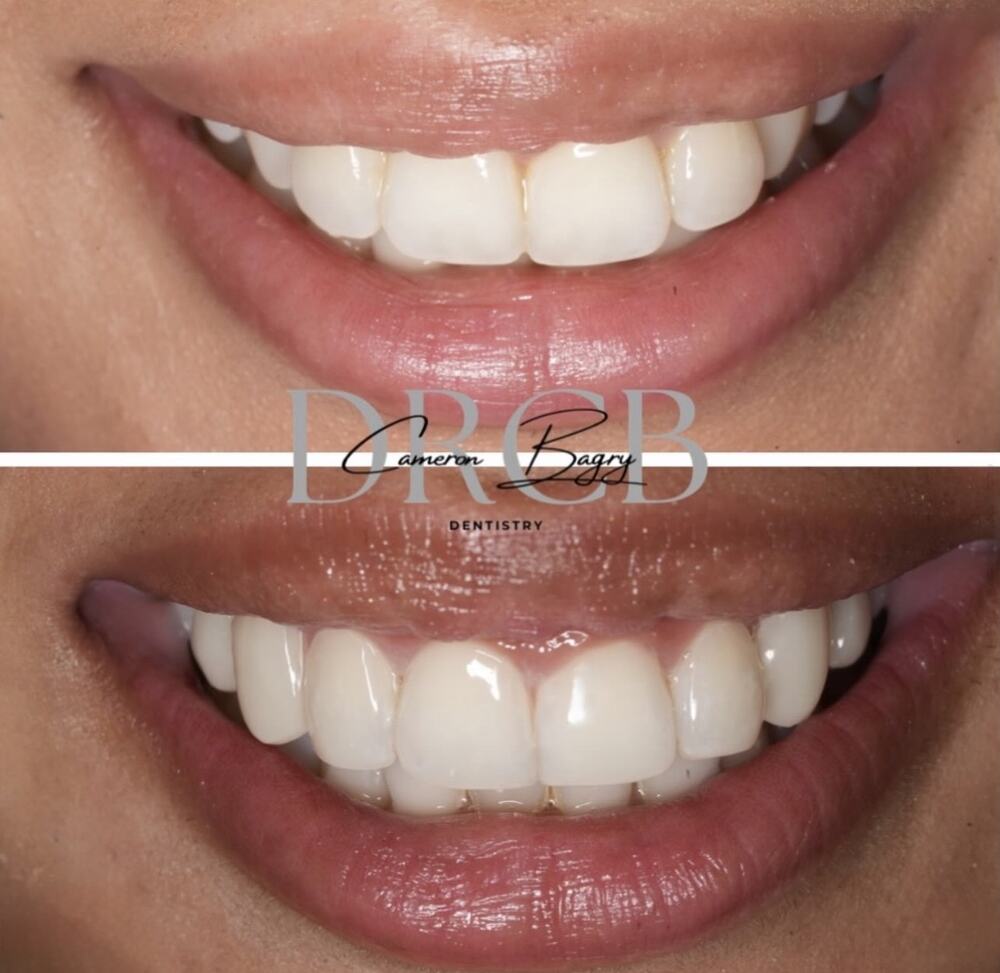
See our composite bonding and veneer results
The same gallery, filterable, so you can compare results rather than descriptions.
See the full gallery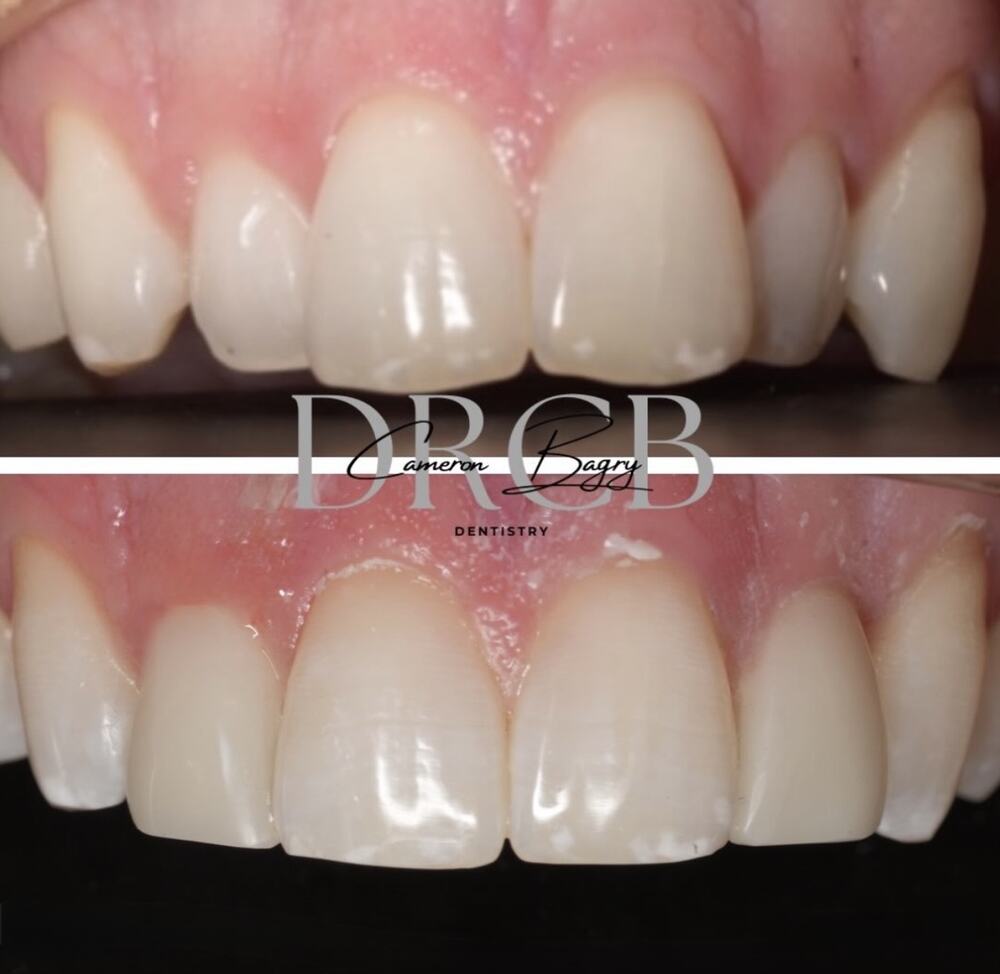
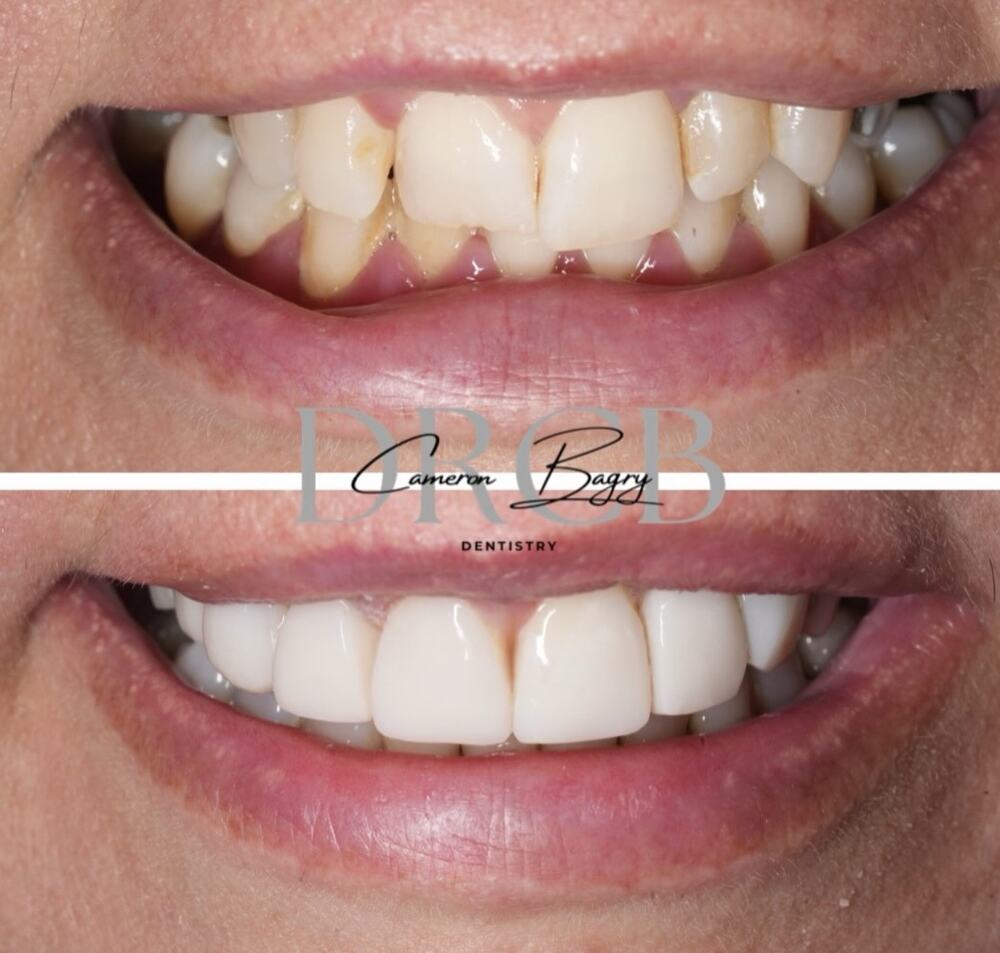
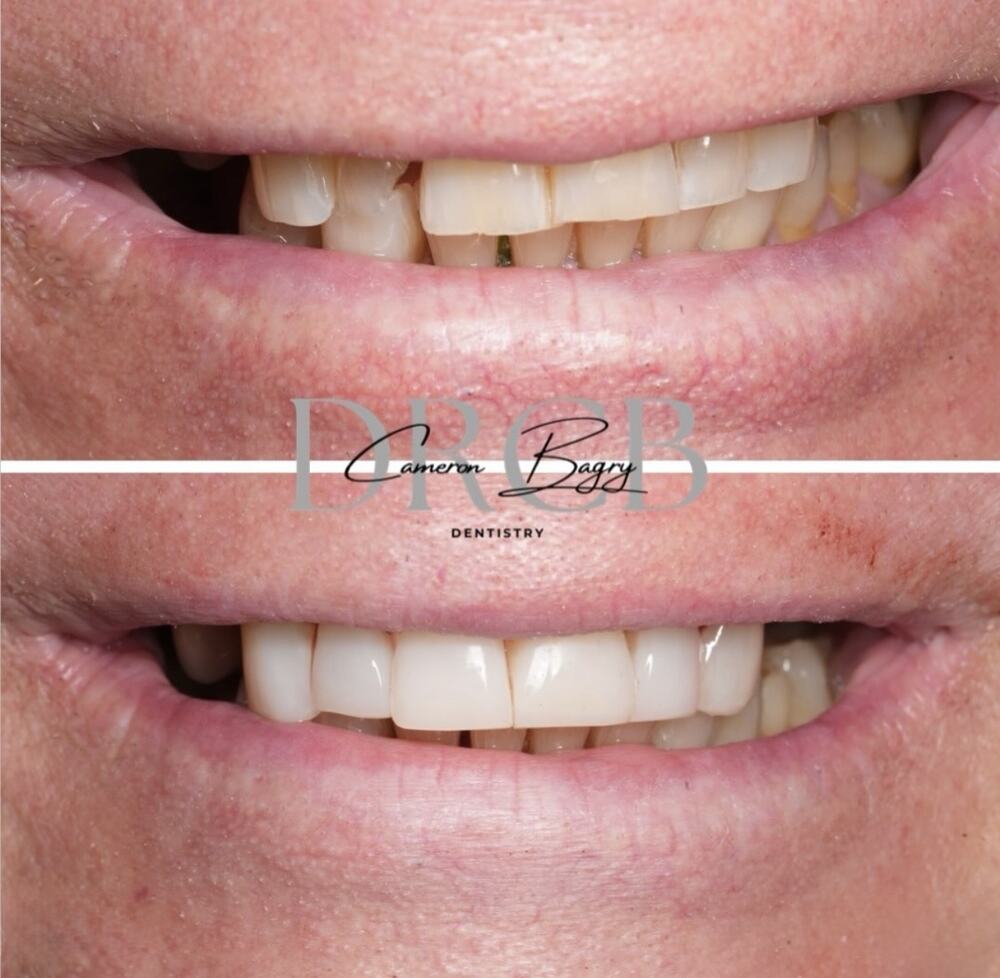
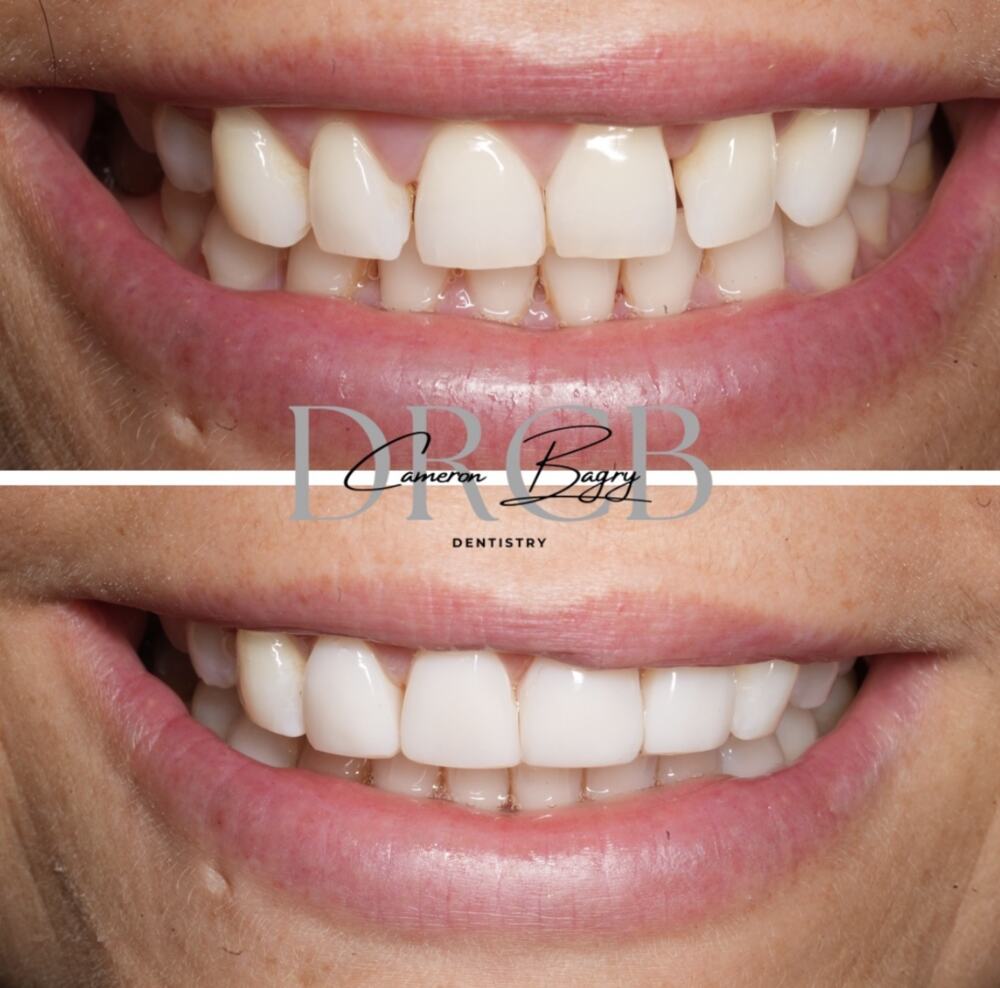


Meet your cosmetic dentist, Dr Cameron Bagry
Cameron is a cosmetic and restorative dentist in Telford. He holds a postgraduate diploma in cosmetic and restorative dentistry and a diploma in minimally invasive dentistry, and Totally Composite, one of the UK’s most respected bonding courses, asked him to be a clinical tutor teaching the technique to other dentists.
He plans every case himself, and seven of the nurses at his own practice have chosen to be treated by him, which is the review he is proudest of. He will also tell you when a smaller plan, or no treatment at all, is the better answer.
The questions patients actually ask when choosing
If yours is not here, ask treatment coordinator Ellie when she rings, or call us. Nobody minds.
Yes, and plenty of people do. Bonding is the more conservative starting point, and choosing it does not close the door on porcelain later. What it does mean is paying for the bonding now and the porcelain later, so if you already know you want the porcelain result, going straight there can work out cheaper over time.
The one thing worth avoiding is repeatedly repairing and replacing bonding for years without deciding. That costs more than either option and is usually a sign the case needed something different from the start.
Neither, in the abstract. Bonding is better where the change is small and you want to keep as much of your own tooth as possible. Porcelain is better where the change is bigger and you want it to hold its colour for longer. The useful question is which is better for your teeth, and that comes from the assessment.
It depends on how your bonding wears. Bonding costs less per tooth but commonly needs refreshing or replacing around the five to seven year mark, so over a decade the gap narrows. Porcelain costs more at the start and generally lasts longer. If you grind your teeth, that shifts the sums towards porcelain plus a nightguard.
Both can look completely natural in the right hands, and both can look obvious in the wrong ones. Layered composite can be extraordinarily lifelike, and porcelain has depth and translucency that is hard to beat. What actually decides it is the design, not the material.
Bonding, usually, because it is additive. That is the main reason Cameron reaches for it first where it will do the job.
Yes, and combination plans are common. Porcelain on the teeth doing the heavy lifting and composite on the ones that need less is often the most conservative way to a balanced result.
Start with a conversation, not a drill
Leave your number and treatment coordinator Ellie rings you back. Between you, you work out what you actually need, and nothing is booked until you want it to be.