
Full mouth rehabilitation in Telford, starting with your bite
For teeth that are worn, chipped, heavily filled or breaking down, rebuilt using the teeth you still have. Cameron plans the bite first, because restorations that ignore it keep failing no matter how well they are made.


If you have been told nothing can be done
People arrive at this page from one of two places. Either their teeth have worn down gradually over twenty years and they have only just noticed how short the front ones have become, or they have spent a decade having individual teeth patched, crowned and re-crowned, and something new fails every few months.
Both of those have the same underlying cause more often than not. The bite. When the way your teeth meet is doing something it should not, individual repairs keep taking the strain and keep giving way. Fixing them one at a time treats the symptom and never the reason, which is why it feels like an expensive treadmill.
A rehabilitation starts by working out what the bite is actually doing, then rebuilding the teeth to a design that works with it rather than against it. It is more planning at the front and considerably less repair work afterwards.
What it involves
Every case is different, and yours is built from some combination of the following rather than all of it.
Onlays
Crowns
Bridges
Veneers and composite bonding
Protection afterwards
Six things that make a smile rehabilitation last
The bite is planned first
Everything else is built to it. Skip this and the new work fails the same way the old work did.
Nothing is treated in isolation
Teeth work as a set. Rebuilding one at a time is how people end up here in the first place.
The most conservative option that works
Onlays before crowns, additive composite before drilling. Enamel does not grow back.
It happens in stages
You are not without teeth at any point, and the plan is built around what you can manage.
The cause gets treated too
Grinding, erosion and acid all get addressed, or the same thing happens again.
It is protected and reviewed
A nightguard where one is needed, and a twelve-month warranty extendable to five years.
The honest limits
This is not full-arch implant work. Cameron does not place implants. If your case genuinely needs them, he will say so rather than working around it.
It can take months rather than weeks, and that is the point. Rushing a rehabilitation is how you end up doing it twice.
Some teeth cannot be saved, and you will be told which ones early rather than late.
Where crowns are needed, that preparation is permanent.
It can be a significant investment. It is also usually less than the total of the last ten years of individual repairs, and it can be phased.
Four steps, and nothing rushed on the day
Request a consultation
Ask for a callback
Use our booking form to request a consultation. Just fill in your contact details and we’ll be in touch.

Ellie calls you back
For a case like this, treatment coordinator Ellie will usually book you straight in for a full clinical assessment with Cameron.
Assessment and planning
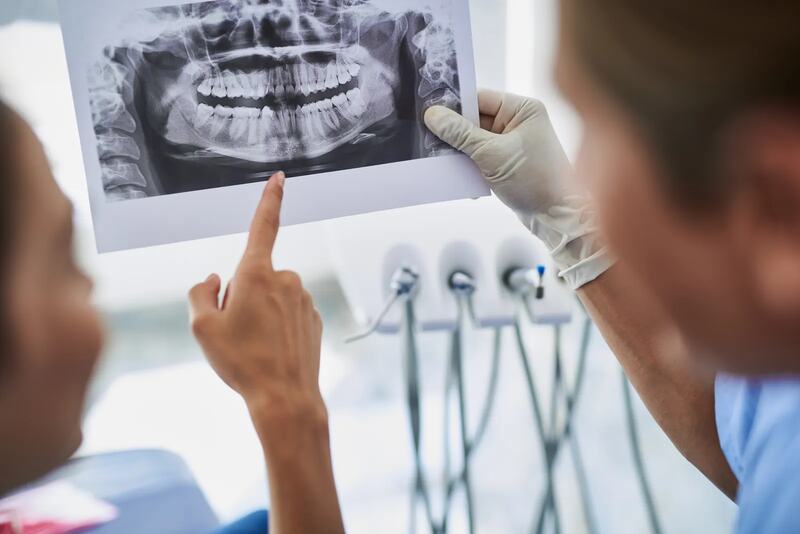
Photographs, x-rays, an OPG, an iTero scan and a proper look at what your bite is doing. Cameron designs the plan himself.

Treatment in stages, then protection
Phased around what suits you, with the result protected afterwards and reviewed.
What full mouth rehabilitation costs in Telford
This is priced as a plan rather than a treatment, because no two cases involve the same work. Every from-price sits on one page, treatment can usually be phased over a longer period, and finance is available through Chrysalis. Your written plan carries the total before anything begins.
See prices and finance

Meet your cosmetic dentist, Dr Cameron Bagry
Cameron is a cosmetic and restorative dentist in Telford. He holds a postgraduate diploma in cosmetic and restorative dentistry and a diploma in minimally invasive dentistry, and Totally Composite, one of the UK’s most respected bonding courses, asked him to be a clinical tutor teaching the technique to other dentists.
He plans every case himself, and seven of the nurses at his own practice have chosen to be treated by him, which is the review he is proudest of. He will also tell you when a smaller plan, or no treatment at all, is the better answer.
The questions patients actually ask about smile rehabilitation
If yours is not here, call and speak with treatment coordinator Ellie or fill out our contact form.
Almost certainly not, and this is the question Cameron hears most. Teeth that look beyond help to the person who owns them are very often restorable. What matters is the health of what is underneath, not how bad it looks in the mirror. The assessment is the only way to know, and it is a conversation rather than a verdict.
No. Treatment is staged specifically so that you always leave with a full smile, whether that is your own teeth, temporaries or the finished work. You will not be sent home with gaps.
Not always. A great deal can be done with the teeth you still have, using onlays, crowns, bridges and composite, and that is Cameron’s starting point. If implants genuinely are the better answer for your case, he will tell you and refer you, because he restores them but does not place them.
Usually because the bite is loading them in a way they were never designed to take, and often because of grinding. Replacing them again without changing that produces the same result a bit later. This is exactly the problem a rehabilitation is meant to solve.
It should not. The design is built around your face and, on bigger cases, you can see it first as a trial smile before anything permanent is made. The aim is teeth that look like they were always meant to be that shape.
No. A large proportion of the people Cameron treats have avoided dentists for years, and worn or broken teeth are very rarely anybody’s fault. Grinding is largely involuntary and acid erosion is often diet or reflux. We’re all human. You will get a plan, not a lecture.
Start with a conversation, not a drill
Leave your number and treatment coordinator Ellie rings you back. Between you, you work out what you actually need, and nothing is booked until you want it to be.