
Teeth grinding and worn teeth in Telford, caught early
Front teeth that look shorter than they used to, edges that keep chipping, jaw ache in the mornings. Cameron treats the cause and rebuilds what has been lost, using material added to your teeth rather than crowns on all of them.


You probably noticed it in a photograph
Tooth wear happens slowly enough that almost nobody catches it happening. What people usually notice is a photograph from ten years ago where their front teeth were visibly longer, or an edge that has chipped for the third time, or that their teeth have started to look flat and even in a way they never used to.
Any of these are worth taking seriously, because wear accelerates. The front teeth are meant to protect the back teeth when your jaw moves sideways. Once they have worn down enough to stop doing that properly, the whole system starts taking loads it was not designed for, and the rate of damage increases.
The signs, explained simply
Front teeth that look shorter, flatter or more even than they used to
Edges that chip repeatedly, however careful you are
Teeth becoming more sensitive, particularly to cold
Jaw ache, or a headache around the temples, in the morning
A partner who has mentioned hearing it at night
Fillings or crowns that keep coming loose or breaking
Teeth that look increasingly yellow as the enamel thins and the layer beneath shows through
What is actually causing it?
Three different processes wear teeth down and they often overlap, which is why the treatment starts with working out which ones apply to you.
Grinding and clenching
Acid erosion
Abrasion
Cameron will work out which of these is doing the damage before rebuilding anything, because rebuilding teeth without changing what wore them down produces new teeth that wear down the same way.
How worn teeth get rebuilt
Request a consultation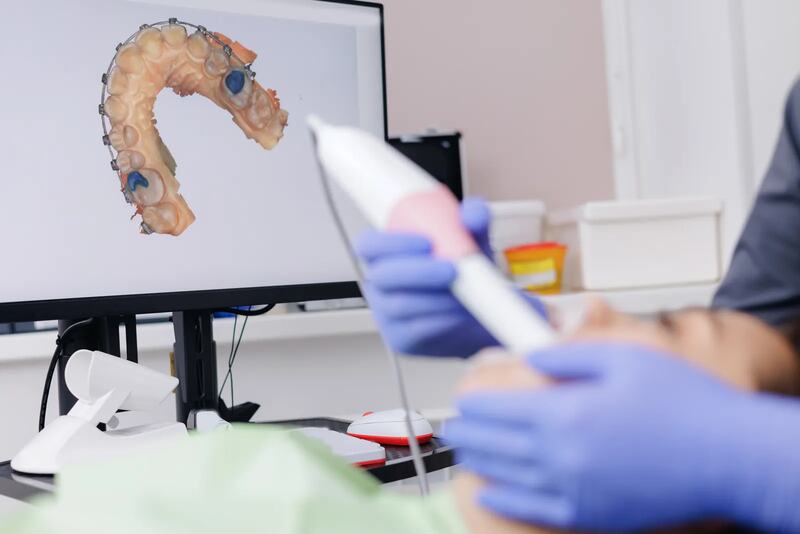
Work out what is causing it
Grinding, acid, brushing, or a combination. The assessment covers your bite, your habits and your medical history.
Stop it getting worse
Usually a nightguard, plus practical changes to whatever is contributing. This part matters more than anything that follows it.
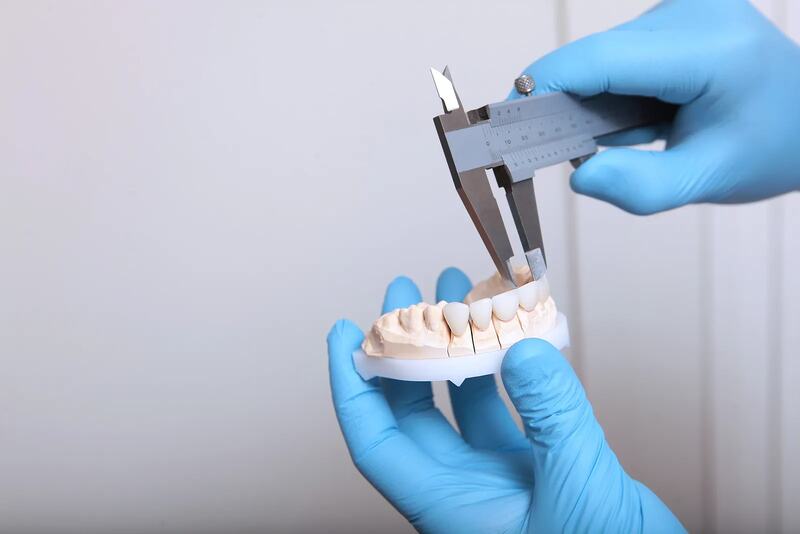
Rebuild what has been lost
Composite added to the worn edges wherever the case allows it, which restores the length and shape without cutting the teeth down for crowns.

Protect the result
The nightguard is remade to fit the rebuilt teeth, and the work is reviewed rather than forgotten about.
Where more extensive rebuilding is needed across the whole mouth, that becomes a full mouth rehabilitation.
Building up rather than cutting down
The traditional answer to badly worn teeth was to crown them, which means reducing what is left of an already worn tooth to make room for the crown. It works, and sometimes it is genuinely necessary, but it takes more tooth from someone who has already lost a lot of it.
Where a case allows, Cameron rebuilds worn teeth additively instead, using composite to restore the lost length and shape and, where needed, to open the bite slightly so there is room to do it. Nothing is drilled away to make space. It is more conservative, it is reversible in a way crowns are not, and it costs less. Whether it suits your case depends on how much tooth is left and what your bite is doing, which is a judgement from the assessment.
If you are planning cosmetic work
This page matters even if you came to the site thinking about veneers or bonding. Grinding is the single biggest threat to cosmetic dentistry, and building beautiful new edges onto teeth that are being ground every night is a way to spend money twice.
If you grind, that gets built into the plan from the start: the design accounts for it, the material choice accounts for it, and a nightguard protects the finished work. It is not an upsell, it is the difference between work that lasts and work that does not.

Dr Cameron Bagry · GDC No. 318684
What this costs in Telford
A nightguard is priced as a single item, and rebuilding worn teeth is priced according to how many teeth need treating and what each one needs. Every from-price sits on one page, treatment can usually be phased, and both consultation fees come off your treatment.
See prices and finance

Meet your cosmetic dentist, Dr Cameron Bagry
Cameron is a cosmetic and restorative dentist in Telford. He holds a postgraduate diploma in cosmetic and restorative dentistry and a diploma in minimally invasive dentistry, and Totally Composite, one of the UK’s most respected bonding courses, asked him to be a clinical tutor teaching the technique to other dentists.
He plans every case himself, and seven of the nurses at his own practice have chosen to be treated by him, which is the review he is proudest of. He will also tell you when a smaller plan, or no treatment at all, is the better answer.
The questions patients actually ask about tooth wear
If your question isn’t here, no worries. Ring treatment coordinator Ellie or fill in our contact form and send us a question.
Almost certainly not. Teeth that look badly worn to you are very often straightforward to rebuild, and the earlier it is caught the more conservative the treatment can be. The thing not to do is wait, because wear accelerates once the front teeth stop protecting the back ones.
Very unlikely from wear alone, particularly if it is picked up and the cause is addressed. What wear does is make teeth more prone to chipping, more sensitive and shorter over time, all of which are treatable.
It will not stop you grinding, because grinding happens whether or not there is anything in your mouth. What it does is take the damage instead of your teeth, which is exactly what it is for. It is the single most effective thing you can do to stop wear getting worse.
Usually not. Where there is enough tooth left, worn teeth can often be rebuilt additively with composite, which preserves what is left rather than reducing it further. Crowns are for teeth too broken down to hold anything smaller, and Cameron will tell you honestly which of yours are which.
Usually because the bite is loading them in a way they were not designed for, and grinding is a common reason. Replacing them again without changing that produces the same result a bit later, which is why the bite is the starting point rather than an afterthought.
No. It is largely involuntary and often related to stress or sleep, and plenty of people have no idea they do it until somebody tells them. Acid erosion is frequently down to reflux or ordinary diet rather than anything careless. You will get a plan rather than a lecture.
Yes, in most cases. Rebuilding the lost length and shape restores the proportions, and because the material is added rather than the tooth reduced, the result usually looks like the teeth you used to have rather than like dentistry.
Start with a conversation, not a drill
Leave your number and treatment coordinator Ellie rings you back. Between you, you work out what you actually need, and nothing is booked until you want it to be.